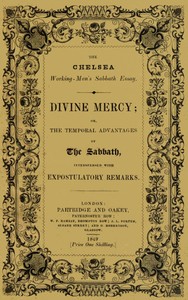
Divine Mercy; or, the temporal advantages of the Sabbath
by George Bryan
"Divine Mercy; or, the temporal advantages of the Sabbath" by George Bryan is a religious essay written in the mid-19th century. This work addresses the significance of the Sabbath, particularly focusing on the practical and temporal benefits it offers to the working classes. It reflects the societal context of the Victorian era, highlighting the intersection of labor, morality, and spiritual observance. In this essay, Bryan argues for the necessity of preserving the Sabbath as a day of rest from labor, positing that it is essential for the well-being of both body and mind. He discusses how consistent work without breaks leads to deterioration in health and morality, particularly for the poor, who often bear the brunt of demanding work hours. Through thorough examination and numerous references, he emphasizes that the Sabbath provides essential time for families to bond and for individuals to reflect spiritually and socially, thus fostering a healthier, more harmonious society. Overall, Bryan's essay advocates for a return to respecting the Sabbath, not just as a religious obligation, but as a critical component of human dignity and societal progress.
Related books
The Sabbath at Home
Silas M. (Silas Milton) Andrews
The Constitutional Amendment: or, The Sunday, the Sabbath, the Change, and Restitution A discussion between W. H. Littlejohn, Seventh-day Adventist, and the editor of the Christian Statesman
Wolcott H. Littlejohn
The pearl of days : $b or, The advantages of the Sabbath to the working classes
Barbara H. (Barbara Henry) Farquhar
The Christian Sabbath: Is It of Divine Origin?
John E. (John Eleazer) Remsburg
The New Crystal Palace and the Christian Sabbath
John Weir
Sabbath Defence Tactics: a manual
James Bridges
The New Sunday Liquor Law Vindicated
J. Ewing (James Ewing) Ritchie
The Sabbath and the Crystal Palace
Anonymous