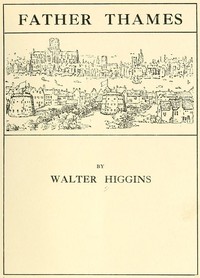
Father Thames
"Father Thames" by Walter Higgins is a historical account of the River Thames and its significance to England, likely written in the early 20th century. The work explores the river's evolution, its historical importance, and its impact on the development of cities and trade in England over two millennia. The narrative delves into the nature of the river itself, its tributaries, and the communities formed along its banks, establishing a connection between the landscape and the growth of commerce and civilization. At the start of the book, Higgins introduces the River Thames, contrasting it with larger rivers globally while emphasizing its historical and economic significance to England. He outlines the structure of the upcoming discussions, which will divide the Thames into three sections: the London River, the great city that the river influenced, and the upper river. The opening portion sets a scholarly tone, using geological history to explain the river's ancient origins and elucidating the natural landscape, as well as the human settlements that developed alongside it due to the river's navigability and resources.
Related Subjects
Bookshelves
Related books
The Emily Emmins Papers
Carolyn Wells
The Town: Its Memorable Characters and Events
Leigh Hunt
England, Picturesque and Descriptive: A Reminiscence of Foreign Travel
Joel Cook
Ancient Streets and Homesteads of England
Alfred Rimmer
London parks and gardens
Evelyn Cecil
Out and About London
Thomas Burke
A Week's Tramp in Dickens-Land Together with Personal Reminiscences of the 'Inimitable Boz' Therein Collected
William R. (William Richard) Hughes
The Old Road
Hilaire Belloc