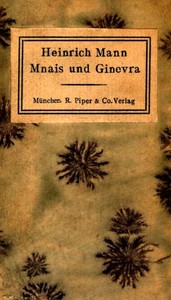
Mnais und Ginevra
"Mnais und Ginevra" by Heinrich Mann is a literary work that can be characterized as a poetic and philosophical novel, likely written in the early 20th century. The book embarks on a journey through the themes of love, art, and tragedy, presenting a rich tapestry of human emotions and existential reflections. The narrative explores the relationships, desires, and choices of its characters, delving deeply into their psyche. The story primarily revolves around two intertwined narratives: that of Mnais, a nymph who becomes ensnared by love and art, ultimately transforming into a stone figure, and Ginevra, a woman who grapples with her own passions and conflicts in the wake of her death. Through their experiences, Mann examines the complexities of desire, sacrifice, and the search for meaning within relationships. Mnais serves as a symbol of beauty and tragedy, while Ginevra's resurrection evokes themes of redemption and the intricate dance between mortality and eternal love. Together, they resonate with the reader on a profound level, prompting reflections on the nature of existence and art's role in capturing the ephemeral moments of life.
Related Subjects
Bookshelves
Related books
Anspruchslose Geschichten
Pauline Hann
Heimat: Erzählungen
Anna Schieber
Wanderschuhe und andere Erzählungen
Anna Schieber
Gehirne: Novellen
Gottfried Benn
Durch Wüste und Harem Gesammelte Reiseromane, Band I
Karl May
Ulrike: Eine Erzählung
Carl Sternheim
Die Tote und andere Novellen
Heinrich Mann
Flöten und Dolche: Novellen
Heinrich Mann