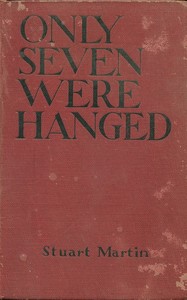
Only seven were hanged
"Only Seven Were Hanged" by Stuart Martin is a crime novel written in the early 20th century. Framed as a sharp debate over capital punishment, it follows a Criminal Court judge and a mysterious waiter inside the exclusive Clue Club as they trade real-case narratives to test whether death sentences can ever be just. The stories unfold as dueling proofs, blending courtroom logic, moral philosophy, and twist-laden crime tales. The opening sets the scene on Christmas Eve at the Clue Club, where the chairman-judge presides and a substitute waiter quietly subverts proceedings. After the club affirms its support for capital punishment, the waiter interrupts, drugs the members into unconsciousness, and challenges the judge: for each case the judge proves deserving of death, one member will be revived; for each unjust case, one remains under. The judge first cites the chilling murder by Ammar Baddan, a Tamil who calmly admits killing an innkeeper; the waiter counters with an honor-and-religion motive that recasts the act within a different code. The waiter’s own case follows: he argues that John Davis, hanged for drowning his former partner Lorry Black, was framed—then reveals he is Black, alive, having staged his “death.” The judge, shaken but resolute, begins a second example about Abe Lammie, a ruthless burglar dubbed “The Mole,” as the duel of stories—and stakes—intensifies.
Related Subjects
Bookshelves
Related books
The Curved Blades
Carolyn Wells
Wizard Will, the Wonder Worker
Prentiss Ingraham
Air Service Boys over the Atlantic; Or, The Longest Flight on Record
Charles Amory Beach
'Doc.' Gordon
Mary Eleanor Wilkins Freeman
The Midnight Guest: A Detective Story
Fred M. (Fred Merrick) White
The Mystery of the Four Fingers
Fred M. (Fred Merrick) White
The master criminal
G. Sidney Paternoster
The Green Mummy
Fergus Hume