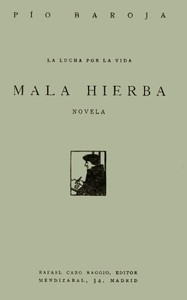
Mala Hierba
by Pío Baroja
"Mala Hierba" by Pío Baroja is a novel written in the early 20th century. The story centers around Manuel, a young man navigating life in Madrid's bohemian quarters while seeking purpose and employment. Through his interactions with various characters, including Roberto Hasting, an ambitious student and journalist, and Alex Monzón, a struggling sculptor, the novel explores themes of ambition, the struggles of the working class, and the pursuit of artistic expression amid poverty. The opening of the novel introduces us to Roberto, who is diligently writing in his cluttered studio filled with unfinished sculptures. He is contrasted with his friend Manuel, who has recently lost his job and is seeking help from Roberto. Despite receiving guidance from Roberto about pursuing work, Manuel expresses frustration about his own lack of motivation. The narrative establishes a vivid depiction of their surroundings and social dynamics, delving into the struggles of youth in a city teeming with noise and ambition. As Manuel grapples with his circumstances, he becomes entangled in the lives and aspirations of the artists around him, setting the stage for a deeper exploration of existential themes that will unfold throughout the narrative.
Related Subjects
Bookshelves
Related books
El caballero encantado (cuento real... inverosímil)
Benito Pérez Galdós
El árbol de la ciencia: novela
Pío Baroja
La dama errante La raza, Tomo I
Pío Baroja
La lucha por la vida: Aurora roja
Pío Baroja
La lucha por la vida: La busca
Pío Baroja
La lucha por la vida: Mala hierba
Pío Baroja
De Sobremesa; crónicas, Cuarta Parte (de 5)
Jacinto Benavente
De Sobremesa; crónicas, Primera Parte (de 5)
Jacinto Benavente