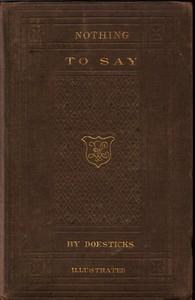
Nothing to Say A Slight Slap at Mobocratic Snobbery, Which Has 'Nothing to Do' with 'Nothing to Wear'
"Nothing to Say" by Q. K. Philander Doesticks is a satirical poem written in the mid-19th century. This work serves as a critique of societal snobbery and the false judgments often made about wealth and virtue during the era. Through humor and allegory, the author addresses themes of class distinction and hypocrisy, particularly focusing on the perceptions surrounding the wealthy versus the poor. In "Nothing to Say," the narrator introduces a character that symbolizes societal prejudices against those who are affluent, suggesting that the wealthy are often unfairly vilified as uncharitable and morally corrupt. The narrative unfolds through a conversation between a character named Charity and the embodiment of mobocratic snobbery, exploring real-life philanthropic acts that contradict these stereotypes. As they journey through various settings, Charity highlights the efforts of the wealthy in charitable activities, challenging the notion that virtue is exclusively found among the "poorest." The poem concludes with a reflection on true honor and morality, suggesting that both rich and poor play critical roles in philanthropy and that superficial judgments often obscure this reality.
Related Subjects
Bookshelves
Related books
Poems
William Ernest Henley
Poems By The Way & Love Is Enough
William Morris
Poesie inedite vol. I
Silvio Pellico
Canzoni & Ripostes Whereto are appended the Complete Poetical Works of T.E. Hulme
Ezra Pound
The Three Hills, and Other Poems
John Collings Squire
Laatste verzen
Guido Gezelle
Out of the North
Howard V. (Howard Vigne) Sutherland
Poems of Henry Vaughan, Silurist, Volume II
Henry Vaughan