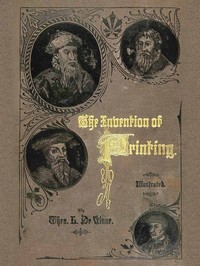
The Invention of Printing. A Collection of Facts and Opinions, Descriptive of Early Prints and Playing Cards, the Block-Books of the Fifteenth Century, the Legend of Lourens Janszoon Coster, of Haarlem, and the Work of John Gutenberg and His Associates
"The Invention of Printing" by Theodore Low De Vinne is a historical account written in the late 19th century. The book explores the origins and development of printing technology, focusing on key figures such as John Gutenberg and the controversies surrounding rival inventors in different regions, particularly Germany and the Netherlands. By detailing early prints, playing cards, block-books, and the mechanics of printing, it seeks to shed light on a significant moment in history that revolutionized the dissemination of knowledge. At the start of the book, De Vinne introduces the subject of printing as not only an essential mechanical art but also a topic shrouded in mystery and contention. He discusses the complexity surrounding the contrast between legends and actual historical records concerning early printing and the figures involved. The author acknowledges the vast number of existing books on the subject, yet critiques their often obscure language and tendency to overlook mechanical aspects of early printing. He emphasizes the need for a clearer, more concise description of early printing methods and the mechanics behind them, setting up the framework for a deeper exploration in the subsequent chapters.
Related books
An Essay on Colophons, with Specimens and Translations
Alfred W. (Alfred William) Pollard
Early Illustrated Books A History of the Decoration and Illustration of Books in the 15th and 16th Centuries
Alfred W. (Alfred William) Pollard
The Invention of Typography A Brief Sketch of the Invention of Printing and How it Came About
Frederick W. (Frederick William) Hamilton
Printing and the Renaissance A paper read before the Fortnightly Club of Rochester, New York
John Rothwell Slater
Early Printed Books
E. Gordon (Edward Gordon) Duff
Early Typography
William Skeen