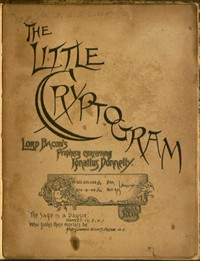
The Little Cryptogram A Literal Application to the Play of Hamlet of the Cipher System of Mr. Ignatius Donnelly.
"The Little Cryptogram" by Joseph Gilpin Pyle is a literary analysis written in the late 19th century that explores the use of a cipher system articulated by Ignatius Donnelly as it applies to Shakespeare’s works, particularly "Hamlet." This book delves into the controversial theory that the plays of Shakespeare contain hidden messages that may indicate their true authorship, suggesting that Lord Bacon was the actual writer of these celebrated plays. In this work, Pyle reviews Donnelly's methodology and examples of how one could supposedly uncover a cipher embedded within "Hamlet." He illustrates the intricate mathematical processes required to decode supposed messages, showcasing how certain words and phrases from the play are manipulated through a series of number substitutions. Throughout the commentary, Pyle maintains a skeptical tone regarding the validity of Donnelly's claims, pointing out the absurdities and complexities involved in such cryptographic exploration. Ultimately, he puts forward a compelling case for literary scrutiny of Shakespearean text while questioning the credibility of those who assert hidden meanings.
Related Subjects
Bookshelves
Related books
Baconian Essays
E. W. (Edward Walter) Smithson
The Philosophy of the Plays of Shakspere Unfolded
Delia Salter Bacon
Bacon and Shakespeare
Albert Frederick Calvert
Concerning the bi-literal cypher of Francis Bacon discovered in his works
Elizabeth Wells Gallup
The Shakespearean Myth: William Shakespeare and Circumstantial Evidence
Appleton Morgan
The Mystery of Francis Bacon
William T. (William Thomas) Smedley
Is Shakespeare Dead? From My Autobiography
Mark Twain
Shakespeare, Bacon, and the Great Unknown
Andrew Lang