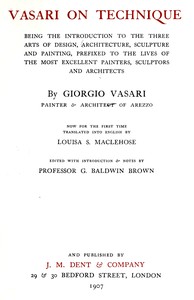
Vasari on technique : $b Being the introduction to the three arts of design, architecture, sculpture, and painting. Prefixed to the lives of the most excellent painters, sculptors and architects
"Vasari on Technique: Being the Introduction to the Three Arts of Design" by Giorgio Vasari is a technical treatise on the arts of architecture, sculpture, and painting, written during the mid-16th century. This work provides a detailed methodology and analysis of various artistic processes, materials, and their applications, aimed at both practitioners and enthusiasts of the arts. In this treatise, Vasari seeks to educate readers on the complexities and practicalities of artistic creation, addressing the techniques and challenges faced by artists of his time. The opening of "Vasari on Technique" introduces the structure of the work and the various artistic domains it will cover. It begins with a preface explaining Vasari's intent to share knowledge about artistic techniques that have often been overlooked. He includes an account of the different types of stones used in architecture and sculpture, detailing their properties and methods of manipulation, with examples of ancient and contemporary works. The text sets a foundation for the technical discussions that follow, highlighting the artistic practices and materials that were essential to the High Renaissance, thus drawing readers into the rich, practical world of Renaissance artistry.
Related Subjects
Bookshelves
Related books
El tratado de la pintura
da Vinci Leonardo
Ladies' manual of art; or, profit and pastime. A self teacher in all branches of decorative art, embracing every variety of painting and drawing on china, glass, velvet, canvas, paper and wood the secret of all glass transparencies, sketching from nature. pastel and crayon drawing, taxidermy, etc.
Anonymous
An Abridgment of the Architecture of Vitruvius Containing a System of the Whole Works of that Author
Vitruvius Pollio
The Ten Books on Architecture
Vitruvius Pollio
Vitruvii De architectura libri decem
Vitruvius Pollio