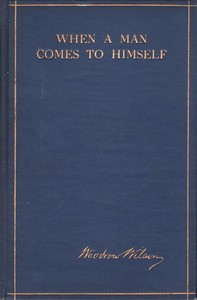
When a Man Comes to Himself
"When a Man Comes to Himself" by Woodrow Wilson is a philosophical essay written in the early 20th century. It explores the transformative experience a man undergoes when he comes to an awareness of his true self and purpose in life. The book reflects on the psychological and spiritual journey of self-discovery, emphasizing that this awakening can occur at various points in life and is essential for personal growth and responsibility. In the essay, Wilson discusses how a man finds his true place in the world through experiences that challenge his self-absorption and illuminate his capacities beyond mere personal ambition. He posits that true satisfaction arises not from self-indulgence, but from dedicating oneself to the service of others, encapsulating the idea that a meaningful life is grounded in relationships and responsibilities within a community. Through various examples, Wilson illustrates that the realization of one's powers and the commitment to unselfish love or service leads to a fulfilling existence. Ultimately, the essay serves as a reflection on the necessity of moral purpose and connection in achieving a contented life.
Related Subjects
Related books
Seneca's Morals of a Happy Life, Benefits, Anger and Clemency
Lucius Annaeus Seneca
A way of life : $b An address to Yale students Sunday evening, April 20th, 1913
William Osler
菜根譚前後集
Zicheng Hong
The Pleasures of Life
John Lubbock
Mental Efficiency, and Other Hints to Men and Women
Arnold Bennett
The Human Machine
Arnold Bennett
The Plain Man and His Wife
Arnold Bennett
Right Living as a Fine Art A Study of Channing's Symphony as an Outline of the Ideal Life and Character
Newell Dwight Hillis