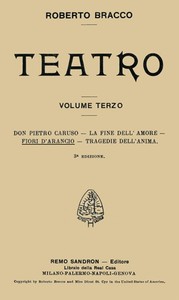
Fiori d'arancio
"Fiori d'arancio" by Roberto Bracco is a one-act play written during the late 19th century. This work, often categorized as a drama, delves into the complexities of education and young love in a rural Italian setting. The story ultimately highlights the poignant transition from childhood to adulthood, encapsulating themes of innocence, societal expectations, and unrequited emotions. The play revolves around a school director, Vannucci, and his interactions with his pupil, Nina, who is on the verge of turning sixteen. As Nina prepares to leave school due to her age, their relationship becomes central to the narrative, revealing a deep emotional connection filled with tension and misunderstandings. Nina's youthful innocence clashes with Vannucci's protective instincts and fears about societal morality. Their exchanges lead to moments of vulnerability, culminating in a dramatic climax when Nina faints during a confrontation with her love interest, Ferdinando. Ultimately, "Fiori d'arancio" explores the bittersweet nature of growing up and the inevitable emotional pains that accompany such transitions.
Related Subjects
Bookshelves
Related books
Danza macàbra
Camillo Antona-Traversi
Parassiti: Commedia in tre atti
Camillo Antona-Traversi
L'Olimpia
Giambattista della Porta
La carbonaria
Giambattista della Porta
La Cintia
Giambattista della Porta
La sorella
Giambattista della Porta
La tabernaria
Giambattista della Porta
Le commedie - lo astrologo
Giambattista della Porta