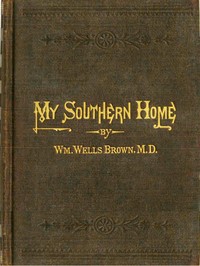
My Southern Home: Or, the South and Its People
"My Southern Home: Or, the South and Its People" by William Wells Brown is a historical account written in the late 19th century. This work provides a firsthand perspective on life in the Southern United States, particularly focusing on the experiences of enslaved individuals and the social dynamics of the time. The author, who is a former enslaved person, draws from personal observations and recollections to depict the everyday occurrences on a Southern plantation through anecdotes and character sketches. At the start of the book, the setting is introduced with a vivid description of Poplar Farm and its inhabitants, notably Dr. John Gaines and his wife, Sarah. The opening chapters establish the family's dynamics and their relationship with the enslaved individuals on their plantation, showcasing the peculiarities of their interactions, the humor embedded in their daily lives, and the stark realities of slavery. Through humorous anecdotes—such as a botched coon hunt and the various misadventures involving the enslaved children, like Billy—Brown sets a tone that blends light-heartedness with the underlying tension of the oppressive system surrounding the characters. As the narrative unfolds, it hints at deeper themes involving morality, religion, and the complexities of slave-master relationships in a social landscape fraught with contradictions.
Related Subjects
Related books
Lectures on the Philosophy and Practice of Slavery As Exhibited in the Institution of Domestic Slavery in the United States, with the Duties of Masters to Slaves
William A. (William Andrew) Smith
American slavery, and the means of its abolition
Jonathan Ward
Memories of Childhood's Slavery Days
Annie L. Burton
The Uprising of a Great People The United States in 1861. to Which is Added a Word of Peace on the Difference Between England the United States.
Agénor Gasparin
American Scenes, and Christian Slavery A Recent Tour of Four Thousand Miles in the United States
Ebenezer Davies
No Compromise with Slavery An Address Delivered to the Broadway Tabernacle, New York
William Lloyd Garrison
Thoughts on African Colonization
William Lloyd Garrison
A Glance at the Past and Present of the Negro: An Address
Robert H. (Robert Heberton) Terrell