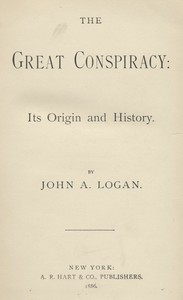
The Great Conspiracy, Volume 4
"The Great Conspiracy, Volume 4" by John Alexander Logan is a historical account written during the late 19th century. This volume delves into the origin and history of the Civil War with a specific focus on the institution of slavery and the pivotal moments leading to emancipation. It reflects on the political and military strategies employed by both the Union and the Confederacy concerning the status of enslaved individuals during this turbulent time in American history. At the start of the narrative, the author discusses the implications of the Civil War on slavery, citing various historical figures such as Patrick Henry and John Quincy Adams to illustrate the tension surrounding emancipation. The opening portion addresses the confusion and debates within the military and political realms regarding how to treat escaped and enslaved individuals, particularly after the confrontation at Fort Sumter. As the war progresses, different views emerge from Union generals on whether to protect or return escaped slaves, revealing the complexity of moral, political, and military decisions being made during the conflict. Notably, the early discussions reflect a gradual shift towards recognizing the necessity of emancipation as both a strategic military concern and a moral imperative, setting the stage for future legislative changes.
Related books
Lectures on the Philosophy and Practice of Slavery As Exhibited in the Institution of Domestic Slavery in the United States, with the Duties of Masters to Slaves
William A. (William Andrew) Smith
American slavery, and the means of its abolition
Jonathan Ward
Memories of Childhood's Slavery Days
Annie L. Burton
The Uprising of a Great People The United States in 1861. to Which is Added a Word of Peace on the Difference Between England the United States.
Agénor Gasparin
American Scenes, and Christian Slavery A Recent Tour of Four Thousand Miles in the United States
Ebenezer Davies
No Compromise with Slavery An Address Delivered to the Broadway Tabernacle, New York
William Lloyd Garrison
Thoughts on African Colonization
William Lloyd Garrison
A Glance at the Past and Present of the Negro: An Address
Robert H. (Robert Heberton) Terrell