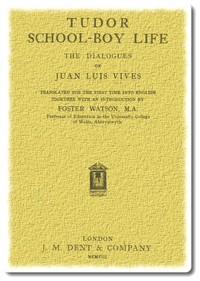
Tudor school-boy life: the dialogues of Juan Luis Vives
"Tudor School-Boy Life: The Dialogues of Juan Luis Vives" by Juan Luis Vives is a collection of educational dialogues written in the early 16th century. This work presents an insightful exploration of the daily lives and experiences of schoolboys in Tudor England, blending elements of pedagogy with authentic childhood interactions. Through dialogues between characters such as Emanuel, Eusebius, and their peers, the text delves into various aspects of school life, family dynamics, and moral education. The opening of the text sets a vibrant tone by depicting a morning routine through engaging conversations among characters getting ready for school. In the first dialogue, "Getting Up in the Morning," the characters Beatrix and the boys, Emanuel and Eusebius, exchange playful banter while addressing morning tasks like dressing, washing, and saying prayers. This lively interaction captures the camaraderie and lightheartedness of childhood while also emphasizing the significance of education and routine. Throughout the subsequent sections, readers are introduced to customs, playful exchanges, and the poignant reflections on the transition from childhood to adulthood—all wrapped within the framework of learning and character building that resonates with timeless themes in education.
Related Subjects
Related books
Petrarch's Secret; or, the Soul's Conflict with Passion Three Dialogues Between Himself and S. Augustine
Francesco Petrarca
A dialoge or communication of two persons Deuysyd and set forthe in the late[n] tonge, by the noble and famose clarke. Desiderius Erasmus intituled [the] pylgremage of pure deuotyon. Newly tra[n]slatyd into Englishe.
Desiderius Erasmus
A Merry Dialogue Declaringe the Properties of Shrowde Shrews and Honest Wives
Desiderius Erasmus
A Modest Meane to Mariage pleasauntly set foorth by that famous Clarke Erasmus Roterodamus, and translated into Englishe by N.L.
Desiderius Erasmus
A Very Pleasaunt & Fruitful Diologe Called the Epicure
Desiderius Erasmus
One dialogue, or Colloquye of Erasmus (entituled Diuersoria) Translated oute of Latten into Englyshe: And Imprinted, to the ende that the Judgement of the Learned maye be hadde before the Translator procede in the reste.
Desiderius Erasmus
The Colloquies of Erasmus, Volume I.
Desiderius Erasmus
Two Dyaloges (c. 1549) Wrytten in laten by the famous clerke, D. Erasm[us] of Roterodame, one called Polyphemus or the gospeller, the other dysposyng of thynges and names, translated in to Englyshe by Edmonde Becke.
Desiderius Erasmus